
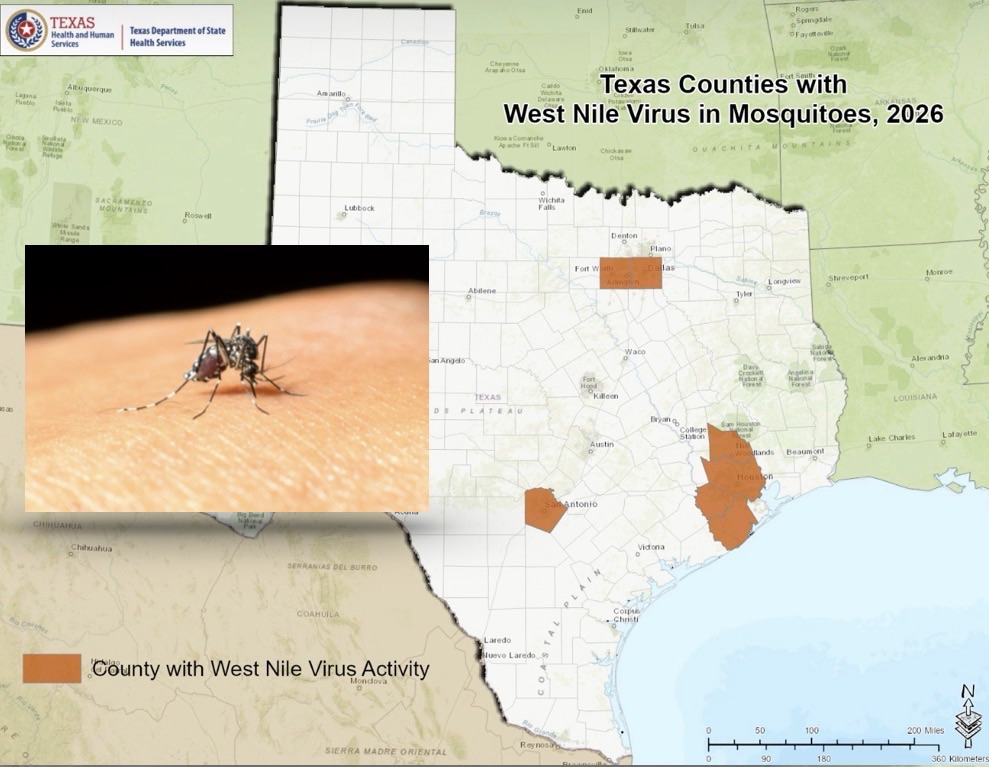
WHARTON COUNTY — The first human case of West Nile virus in Texas for 2026 has been confirmed in Harris County, according to the Texas Department of State Health Services (DSHS).
Health officials said the Harris County resident was diagnosed with West Nile neuroinvasive disease, a rare but serious form of the virus that can affect the nervous system.
The announcement comes as mosquito activity linked to West Nile virus is also being reported in counties neighboring Wharton County during the month of May.
On May 13, Brazoria County officials announced that mosquito traps collected in areas including Manvel and Sweeny tested positive for West Nile virus. On May 19, Fort Bend County officials also announced that mosquito samples collected in Sugar Land tested positive for the virus.
As of now, Wharton County has not reported any mosquitoes testing positive for West Nile virus in 2026.
According to DSHS, Texas has reported 976 total West Nile virus cases over the last five years, including 106 deaths. State data shows 2024 recorded the highest number of deaths during that period with 57, while 2025 had the fewest with 9.
What is West Nile Virus?
West Nile virus is spread through the bite of infected mosquitoes. Health officials say about 80% of infected people never develop symptoms.
Roughly 20% may experience what is known as West Nile fever, which can include:
- Fever
- Headache
- Fatigue
- Muscle and joint aches
- Nausea
Less than 1% develop neuroinvasive disease, which can cause severe neurological complications including:
- Neck stiffness
- Tremors
- Convulsions
- Disorientation
- Paralysis
- Death
Officials advise anyone experiencing severe or concerning symptoms to contact a healthcare provider.
How to Reduce Risk
Health experts recommend eliminating standing water where mosquitoes can breed, including:
- Buckets
- Flowerpots
- Kiddie pools
- Pet bowls
- Toys
- Clogged gutters
Residents are also encouraged to:
- Repair window and door screens
- Use air conditioning when possible
- Wear long sleeves and pants during peak mosquito hours
- Use insect repellents containing DEET or picaridin
Officials say these same precautions can also help protect against other mosquito-borne illnesses such as dengue, Zika, and chikungunya.
Health officials continue to monitor mosquito activity across Southeast Texas as warmer weather increases mosquito populations heading into summer.