
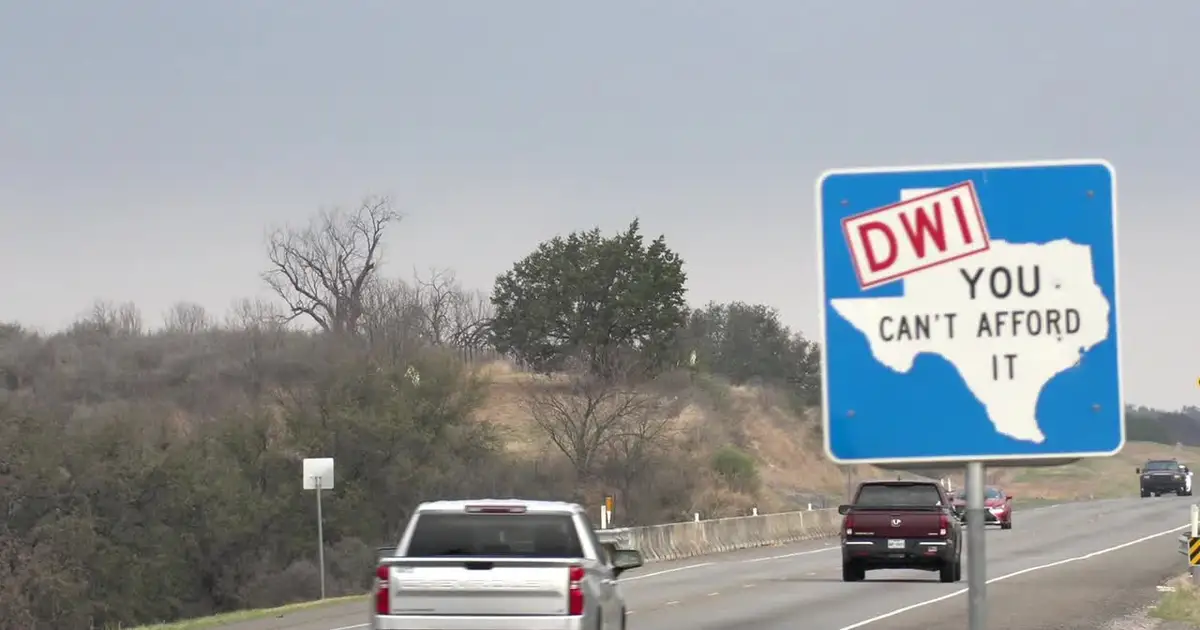
AUSTIN — A proposal filed ahead of the 2027 Texas legislative session would make a second driving while intoxicated offense a felony and impose an even tougher penalty for repeat offenders caught driving in certain school crossing zones.
House Bill 746, filed by state Rep. Vince Perez of El Paso, would change how Texas prosecutes several repeat intoxication offenses. If lawmakers approve it, the changes would apply statewide, including in Wharton County.
The measure has not passed. Current DWI penalties remain in place.
What would change for a second DWI?
Under current Texas Penal Code Section 49.09, a DWI involving one qualifying prior intoxication conviction is generally a Class A misdemeanor, with a minimum confinement term of 30 days. HB 746 would instead classify an offense covered by that provision as a state jail felony.
State jail felonies generally carry 180 days to two years in a state jail facility and a possible fine of up to $10,000. The bill also would prevent courts from using a provision that ordinarily permits certain state jail felonies to be punished within the Class A misdemeanor confinement range.
The enhancement is not limited to a prior conviction for driving a car while intoxicated. The bill’s qualifying prior offenses include intoxication-related operation of a motor vehicle, aircraft, watercraft or amusement ride. Its amended provision also covers certain repeat flying, boating and amusement-ride intoxication offenses.
A separate, tougher penalty near school crossings
HB 746 proposes a third-degree felony for a DWI offense covered by its new school-zone provision when a person has one qualifying prior intoxication conviction and is operating a vehicle in a school crossing zone while the reduced speed limit applies.
A third-degree felony generally carries two to 10 years in prison and a possible fine of up to $10,000. The provision would not automatically make every DWI near a school a third-degree felony; the specified school-crossing-zone conditions and prior conviction would have to be established.
Probation, license suspension and ignition interlocks
The seven-page bill also updates provisions governing community supervision, license suspensions and ignition interlock devices. Under its proposed language, defendants punished under the revised repeat-offense provision and granted community supervision would face a minimum 72 hours of continuous county jail confinement, with a five-day minimum in a specified additional circumstance. For defendants punished under the proposed school-zone enhancement and granted community supervision, the minimum would be 10 days.
Other amendments address when a driver’s license must be suspended and when an ignition interlock device is required. These details matter because the proposal goes beyond simply changing the name or classification of a charge.
What it would mean in Wharton County
For drivers in Wharton, El Campo, East Bernard and surrounding communities, the same statewide rules would apply if the legislation becomes law. A qualifying repeat DWI prosecuted locally could be charged as a state jail felony rather than the Class A misdemeanor ordinarily provided under current law.
When could it take effect?
The introduced text specifies September 1, 2027, as the proposed effective date. It also says the changes would apply only to offenses committed on or after that date; earlier offenses would remain governed by the law in effect when they occurred.
Texas lawmakers are scheduled to convene for the 90th regular legislative session on January 12, 2027. HB 746 must still proceed through the legislative process before it could become law, and lawmakers may change its wording along the way.
Residents can monitor the proposal through Texas Legislature Online’s HB 746 record.
Sources
This report is based on the introduced text of House Bill 746, the Texas Penal Code, Chapter 49, the Texas Penal Code, Chapter 12, and the Texas Code of Criminal Procedure, Chapter 42A. The bill’s legislative status is available through Texas Legislature Online.
Leave a Reply