
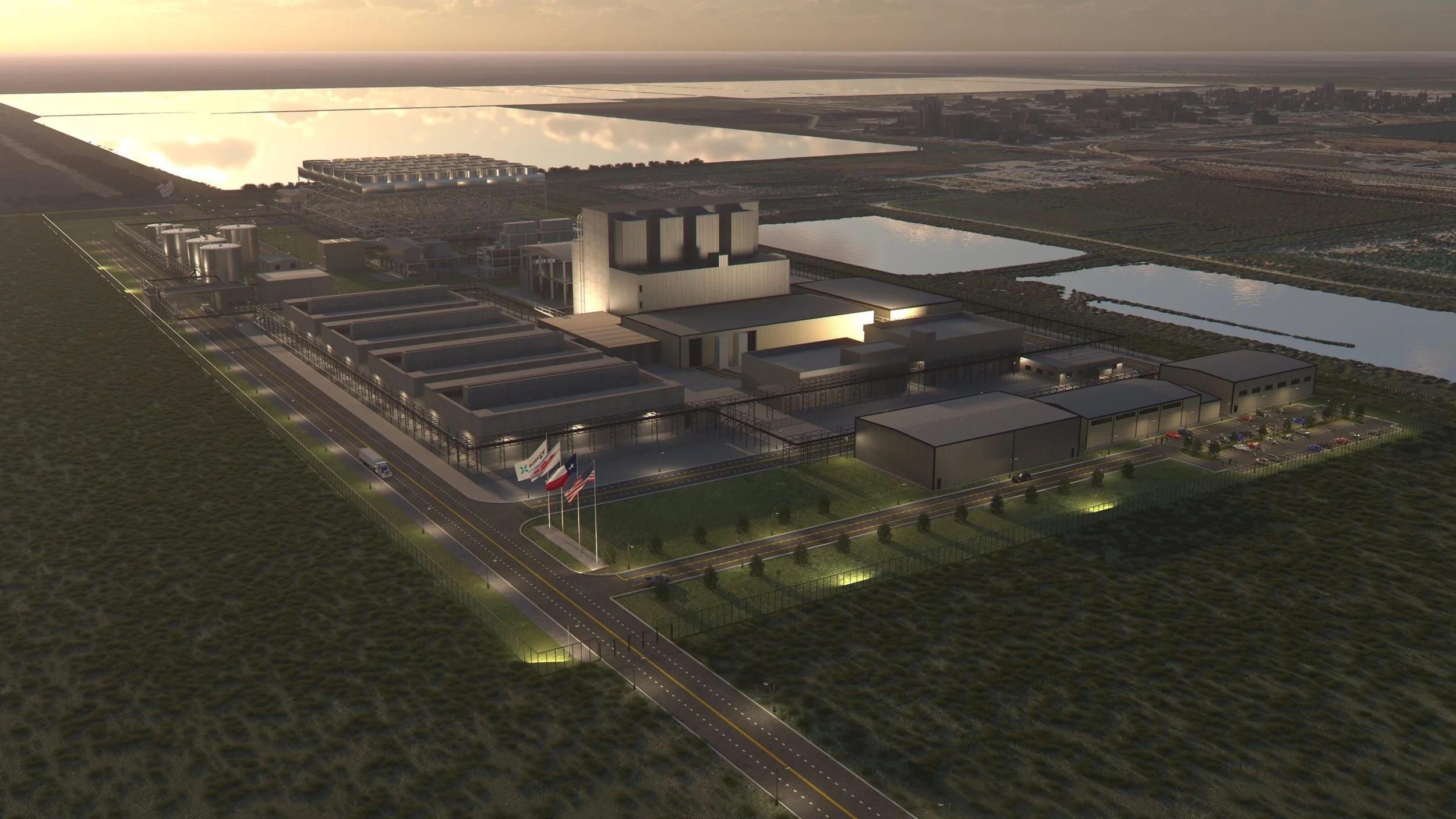
SEADRIFT — A proposed nuclear power project on the Texas Gulf Coast has received federal construction approval, marking a significant step toward bringing a new generation of nuclear reactors to one of the region’s major industrial facilities.
The U.S. Nuclear Regulatory Commission (NRC) issued the permit November 9, 2026, for the Long Mott Generating Station, a proposed four-reactor facility at Dow’s Seadrift Operations site in Calhoun County.

The project, being developed by Dow and nuclear technology company X-energy, would generate up to 320 megawatts of electricity while producing high-temperature steam for Dow’s chemical manufacturing operations.
According to the U.S. Department of Energy, the approval marks the first time an advanced nuclear facility has received a construction permit for an industrial site in the United States. The permit is also the first issued for a high-temperature gas-cooled reactor in decades.
Four nuclear reactors planned for Calhoun County
The proposed facility would use four X-energy Xe-100 small modular reactors, each designed to produce 80 megawatts of electricity or 200 megawatts of thermal energy.
Unlike conventional nuclear power plants that primarily generate electricity for the public grid, the Long Mott project is being designed around the needs of Dow’s manufacturing operations. The reactors would primarily supply industrial steam, with excess electricity potentially exported to the power grid.
Dow plans to use the facility to replace existing electricity and steam-generating equipment at its Seadrift plant that is approaching the end of its operating life. If completed, the reactors are expected to support the manufacturing site for approximately 60 years.
The technology uses helium gas for cooling and specially engineered nuclear fuel known as TRISO, which contains multiple protective layers designed to retain radioactive materials under extreme conditions.
Construction has not started
Despite receiving federal approval, Dow has not made a final decision to build the facility.
In its November 9 announcement, Dow said additional engineering, design work and financial reviews must be completed before construction can move forward. The project must also undergo review by Dow’s board of directors.
If the company decides to proceed, construction could begin later this decade, with initial energy production targeted for the early 2030s.
The construction permit does not authorize the reactors to begin operating. Long Mott Energy, a wholly owned Dow subsidiary, must obtain a separate operating license from the NRC before the facility can begin operations.
Federal government supporting development
The project is part of the Department of Energy’s Advanced Reactor Demonstration Program, an initiative intended to help bring new nuclear technologies into commercial use.
X-energy’s demonstration and fuel-development efforts are associated with approximately $2.15 billion in federal cost-shared support. That figure is not the total construction cost of the proposed Seadrift facility.
The NRC completed its environmental assessment in May 2026, issuing a finding of no significant impact. Its safety evaluation was completed in October, ahead of the construction permit approval.
A major development for the Texas Gulf Coast
The proposed Long Mott Generating Station would be located in Calhoun County, southwest of Wharton County, in a region with a significant concentration of chemical plants, refineries and other industrial operations.
The project represents a potential shift in how large manufacturing facilities obtain electricity and steam, particularly as companies consider alternatives to conventional fossil-fuel-powered equipment.
For Gulf Coast communities, questions remain about the project’s construction cost, employment opportunities, water needs and long-term effects on surrounding areas.
For now, the federal permit clears a major regulatory hurdle. Whether the nuclear facility is ultimately built will depend on Dow’s remaining engineering, financial and investment decisions.
Sources
This report is based on the U.S. Nuclear Regulatory Commission’s November 9 announcement, the Department of Energy’s November 13 report, Dow’s official project announcement, and the Federal Register construction permit notice.
Leave a Reply