
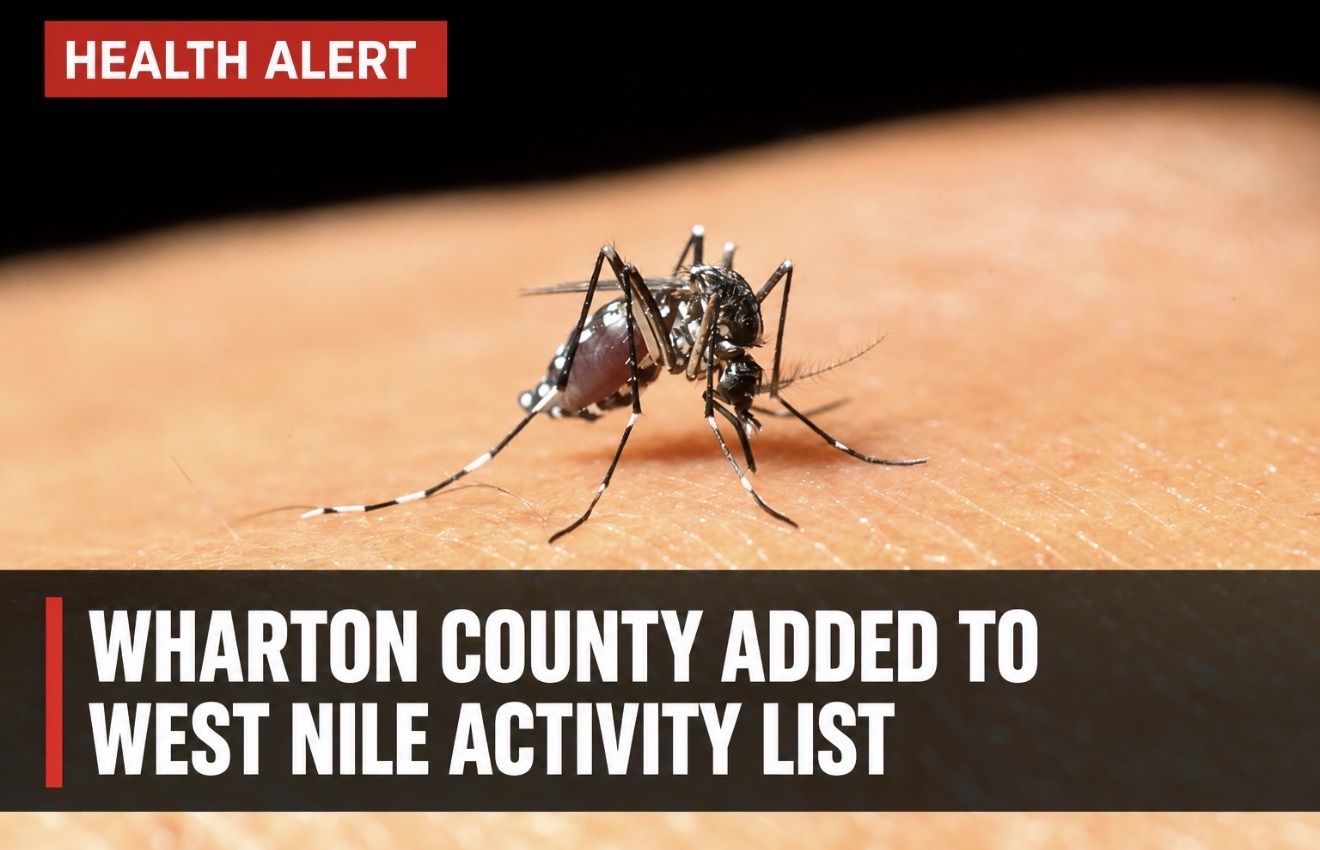
WHARTON COUNTY — Wharton County has been added to the Texas Department of State Health Services’ latest arbovirus activity report after a blood donor screened positive for West Nile virus.
The 2026 DSHS Arbovirus Activity Report for Week 35, ending Sept. 5 and released Sept. 8, lists Wharton County with one presumptive viremic blood donor, or PVD, connected to West Nile virus activity.

A presumptive viremic donor is someone whose donated blood screened positive for West Nile virus even though the person was not showing symptoms at the time of donation. DSHS separates those detections from clinical human cases, meaning the Wharton County entry does not represent a confirmed case of West Nile illness.
According to the Week 35 county table, Wharton County reported:
- 0 West Nile-positive mosquito pools
- 0 human West Nile fever cases
- 0 human West Nile neuroinvasive disease cases
- 1 presumptive viremic blood donor
- 0 total clinical human West Nile cases
The statewide report shows 50 human West Nile cases in Texas, including 39 neuroinvasive cases and 11 febrile illness cases. DSHS also lists three deaths, 20 presumptive viremic blood donors and 1,296 West Nile-positive mosquito pools statewide.
The report also tracks several other mosquito-borne and animal-related viruses, including dengue, chikungunya, Zika, St. Louis encephalitis and Eastern equine encephalitis.
For Week 35, DSHS reported nine human dengue cases and three chikungunya cases statewide. The report did not list any human Zika cases.
The county-by-county section shows West Nile activity across multiple parts of Texas, particularly in the Houston, Dallas-Fort Worth and Gulf Coast regions. Nearby counties appearing in the report include Fort Bend, Brazoria, Harris and Montgomery counties, among others.

DSHS also included a statewide map showing counties with reported arbovirus activity. Counties highlighted for West Nile activity are those where the state received reports involving an arbovirus-positive bird, mosquito pool, sentinel chicken, horse, human case or presumptive viremic donor.
That means a county can appear on the West Nile activity map even without a diagnosed human illness case, as is currently the situation in Wharton County.
The Week 35 report also includes a chart tracking West Nile-positive mosquito pools by week. Texas mosquito detections rose sharply during the summer before beginning to decline in the most recent reporting weeks, although West Nile activity continues to be documented across the state.
A separate chart tracking human West Nile cases also shows reports increasing during the summer months.
DSHS cautions that its weekly arbovirus reports are preliminary snapshots and may change as additional information is received or corrected. Final weekly report data are not considered complete for surveillance purposes until later annual summaries are released.
West Nile virus is primarily spread through the bite of an infected mosquito. Most people infected with the virus do not develop symptoms, while some may experience fever, headache, body aches, joint pain, vomiting, diarrhea or rash. More serious neuroinvasive illness can affect the brain and nervous system.
Health officials recommend reducing mosquito exposure by using insect repellent, wearing long sleeves and pants when practical, and removing standing water around homes where mosquitoes can breed.
At this time, the DSHS report shows evidence of West Nile activity in Wharton County, but no reported clinical human West Nile illness case in the county.
View the State Report
Readers can review the Texas Department of State Health Services’ weekly arbovirus reports, including county-by-county West Nile activity, human cases, mosquito testing and blood donor detections, directly through the state’s website.
View the Texas DSHS Arbovirus Weekly Activity Reports
Source: Texas Department of State Health Services, 2026 Arbovirus Activity Report, Week 35.


Leave a Reply