
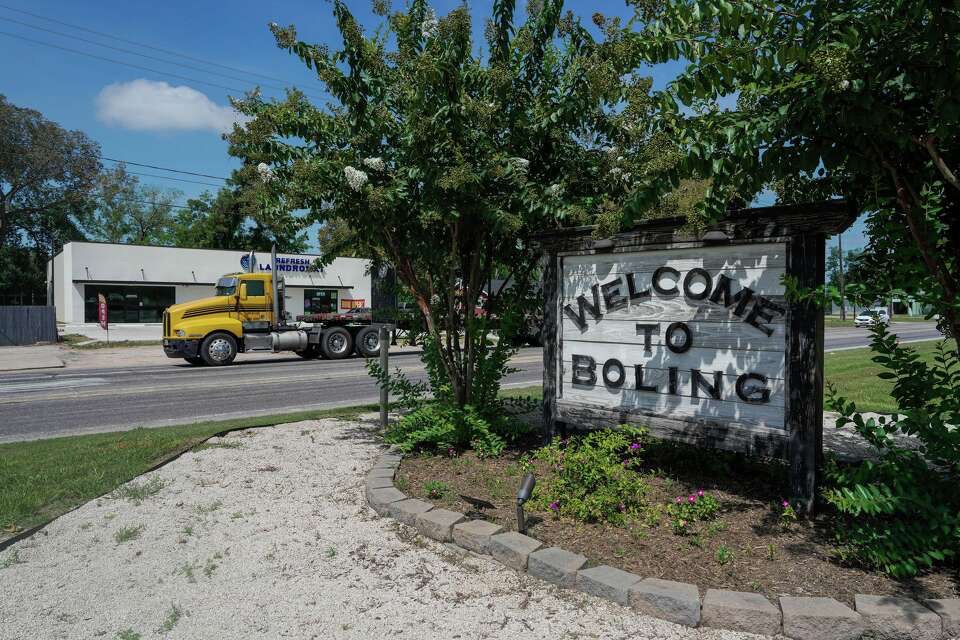
BOLING — Amazon has secured groundwater permits for its Wharton County data center campus, authorizing millions of gallons in withdrawals as the company’s total electricity needs remain unconfirmed.
The Coastal Bend Groundwater Conservation District approved three well permits Sept. 8, allowing 78.2 million gallons over 2½ years for restrooms, construction and fire protection, according to the Houston Chronicle’s Oct. 2 report.
That allowance averages about 31.3 million gallons a year if spread evenly across the permit period. It represents authorized withdrawals; actual use could be lower.
How much water does Amazon expect to use?
In its Sept. 11 update for Wharton County residents, Amazon put its expected potable water use at approximately 16,000 gallons a day for bathrooms, cleaning and fire suppression.
At that daily rate, use would total about 5.84 million gallons over a full year. Potable water is water suitable for drinking.
The company’s daily estimate describes its current operating plans, while the reported permits cover several uses over a multiyear period. The figures do not establish how much the wells will actually pump.
Amazon says the 13 buildings currently planned will not use water for cooling. It also says groundwater will not be used to cool data centers at the site.
For potential expansion, the company says it is working with water authorities to develop nonpotable supplies for any future cooling needs. Those supplies would involve water that does not need to meet drinking-water standards.
Electricity needs remain unconfirmed
AWS executive Josh Weissman estimated roughly 60 megawatts per building, potentially 780 megawatts for 13 buildings, the Chronicle reported. Amazon declined to confirm total demand, citing ERCOT review.
The estimate indicates the scale of possible electricity demand. It is not a confirmed total or a measure of electricity already consumed. Actual demand would depend on operating conditions.
In its community update, Amazon says the campus will draw electricity from the utility grid through existing transmission infrastructure and substations it is funding on-site. The company says it has no plans to build or operate a gas plant at the property.
Amazon also says it will pay the costs of powering its operations and reduce its grid demand or use backup generation during grid emergencies.
The permit approval advances the project’s groundwater supply arrangements. The campus’s final electricity requirement remains unconfirmed.
Photo courtesy of the Houston Chronicle.



Leave a Reply