
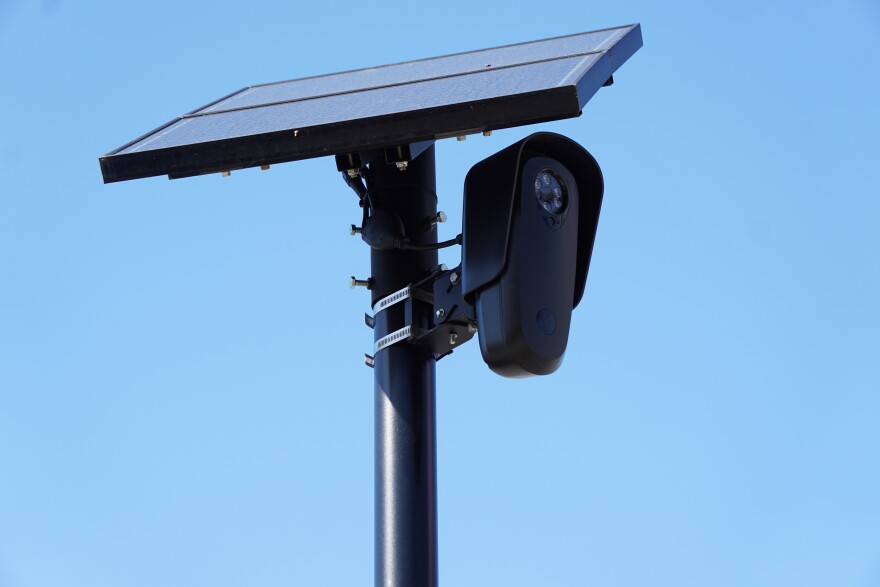
WHARTON — Wharton Police Chief T.D. Lynch has released a public statement explaining how the city’s Flock Safety license plate reader (LPR) camera system operates, addressing questions about privacy, surveillance and the department’s use of the technology.
The statement, posted on the Wharton Police Department’s Facebook page on July 26, 2026, comes as questions about the camera system have been raised by members of the community.
According to Lynch, the City of Wharton currently has 14 Flock Safety cameras positioned at entrances and exits to the city. He said none of the city’s cameras are located on U.S. 59, noting that cameras along the highway belong to the State of Texas.
Lynch said he presented the proposal to install the Flock camera system to the Wharton City Council, which approved the program after considering the information presented. The cameras were obtained through a grant, and while the city did not receive funding directly from Flock Safety, it pays an annual maintenance fee to utilize the system.
According to the chief, access to the Flock system is limited to supervisory personnel and investigators assigned to the department’s Criminal Investigations Division. It is not available to all officers or other city employees.
The system can automatically alert investigators when a vehicle associated with a reported stolen vehicle, AMBER Alert, Silver Alert, active arrest warrant or other qualifying law enforcement notification enters the city. Lynch said it can also notify investigators when a vehicle connected to an active criminal investigation is detected.
He described one of the system’s most valuable features as its ability to search by vehicle description when a license plate is unavailable. For example, if witnesses report a suspect leaving a crime scene in a red four-door passenger car but cannot provide a license plate, investigators can search for vehicles matching that description that passed one of the city’s cameras around the time of the offense.
Lynch also stated that every search conducted through the system is logged and audited. While acknowledging reports of misuse involving similar technology in other jurisdictions, he said any misuse within the Wharton Police Department would be taken seriously and would not be tolerated.
The chief emphasized that the cameras are not located throughout neighborhoods or on city streets. Instead, they are positioned at Wharton’s entrances and exits to help identify vehicles entering or leaving the city that may be connected to criminal activity.
“The goal isn’t to watch people who live here or keep track of where anyone goes during their day,” Lynch wrote. “Our interest isn’t in the daily activities of law-abiding citizens—it’s in identifying the people who come here to commit crimes and then leave.”
He also addressed questions about public approval of the program, explaining there was no legal requirement for a public vote. Instead, he presented the proposal to the City Council, which voted to approve the system.
Transparency Through Information
On July 16, 2026, Wharton Post contacted Chief Lynch requesting statistics on the Flock camera system, including how many traffic stops and arrests this year involved assistance from the technology. Lynch responded that he would work on obtaining those statistics.
While the chief’s July 26 statement explains how the camera system is intended to operate and the safeguards in place, it does not include data showing how often the technology has been used to assist investigations, traffic stops, arrests or stolen vehicle recoveries.
Providing both an explanation of how the system works and measurable information about its results helps give the public a more complete understanding of the program. As of publication, Wharton Post is still awaiting the requested statistics from the Wharton Police Department and will update this story if that information is provided.



Leave a Reply